Boehringer Ingelheim is advancing drug discovery with QPatch automated patch clamp technology
Boehringer Ingelheim is the world’s largest privately owned pharmaceutical company, with a presence in over 130 markets and a global workforce of more than 53,000 employees. Driven by a deep commitment to scientific innovation, they develop and deliver cutting-edge solutions across human pharmaceuticals, animal health, and biopharmaceutical contract manufacturing.
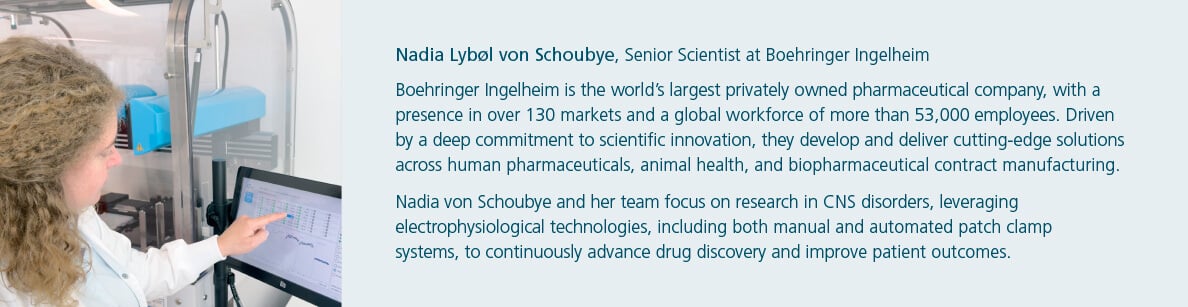
As the head of Boehringer Ingelheim’s in vitro electrophysiology lab in the department of Neuroscience and Mental Health, Senior Scientist Nadia von Schoubye and her team are dedicated to advancing ion channel research in central nervous system (CNS) disorders. “We are mostly studying psychiatric disorders, and within electrophysiology, we focus on highly detailed compound characterization,” explains Nadia von Schoubye.
The lab primarily tests compounds in simple expression systems, such as HEK and CHO cells, isolating single targets to understand their mechanisms of action. Concentration response experiments are a core focus, with the team of five researchers utilizing both manual and automated patch clamp techniques to gather data.
Collaborating with CROs to expand capabilities
Boehringer Ingelheim often collaborates with contract research organizations (CROs) to enhance their electrophysiology capabilities. “If we lack capacity in the lab for additional ion channel projects, we outsource to CROs, but we always maintain oversight to ensure consistency in data generation and seamless knowledge exchange.”
Selecting CROs that utilize the same equipment is crucial for reproducibility. “This is always an advantage,” says Nadia von Schoubye. “We choose partners based on their instrumentation, ensuring they can handle our detailed characterization needs rather than large-scale screening.”
Key considerations in research assays
When establishing new routine assays in-house, the team wanted to enable seal enhancer-free automated assays. “Research has shown that for some channels, seal enhancers cause non-linear leak currents, which can interfere with recordings – especially for low-current ion channels,” explains Nadia von Schoubye. Additionally, bio or fluoride-based seal enhancers can disrupt calcium-sensitive channels, posing further challenges. As a result, the team favors physiological solutions over fluoride and seal enhancers whenever possible.
“I may be a bit of a purist in this regard,” Nadia von Schoubye admits, “but I prefer to work without fluoride. We have some sensitive assays where the seal enhancers make data interpretation difficult. In these cases, not a lot of time is saved, as we still need to use manual patch clamp to confirm the results. The QPatch provides an alternative, as automated assays work routinely and without seal enhancers”.
Complete washouts and same-cell comparisons
A complete washout process is essential in many experiments, particularly for rapidly desensitizing ion channels or agonist-activated receptors. “Being able to wash off an agonist quickly allows us to reapply it and establish a stable baseline before introducing pharmacology,” Nadia von Schoubye explains. “This also helps us to assess how well a compound washes off and whether its effects persist.”
Maintaining consistency within a single cell is equally critical in electrophysiology. “Same-cell comparisons ensure that we can track signal changes accurately,” Nadia von Schoubye notes. “If we compare different groups of cells, natural variability can obscure our results. Having a reference compound or a baseline to normalize to within the same cell often yields higher-quality, more reliable data. It also improves the throughput dramatically!”
"We needed a new system with higher output while preserving key advantages, such as the ability to perform washout steps and avoid seal enhancers for detailed characterizations of compounds"
Integrating Sophion’s QPatch into the workflow
Nadia von Schoubye’s team sought a fluoride-free solution with complete washouts in the flow channels. With the QPatch, they can now conduct specialized assays, which has significantly enhanced their workflow and in-house electrophysiology capabilities.
In the lab’s electrophysiology workflow, validated cell lines undergo brief manual testing before transitioning to the QPatch. However, when the lab conducts clone selection in-house, it often begins directly on the QPatch. “Already here we start the assay validation and the reference compound testing on the QPatch,” explains Nadia von Schoubye. “We might conduct a few manual experiments to confirm assay tracking, select 10 compounds to ensure consistency, and then continue the work on the QPatch. The system is always running at full capacity.”
Frequent use of electrophysiology assays is crucial for maintaining accuracy and efficiency. If equipment remains idle for too long, the entire setup – from fresh cells and reference compounds to quality control – must be recalibrated. Having a system that aligns with the lab’s throughput needs minimizes downtime and ensures an optimized workflow.
Enhancing electrophysiology capabilities with QPatch
Boehringer Ingelheim’s in vitro electrophysiology lab employs a range of patch clamp techniques, including manual and automated solutions. The manual patch clamp, considered the gold standard in electrophysiology, is primarily used for assay validation and in-depth receptor characterizations. “We also use it for the most promising compounds that progress to in vivo experiments,” explains Nadia von Schoubye.
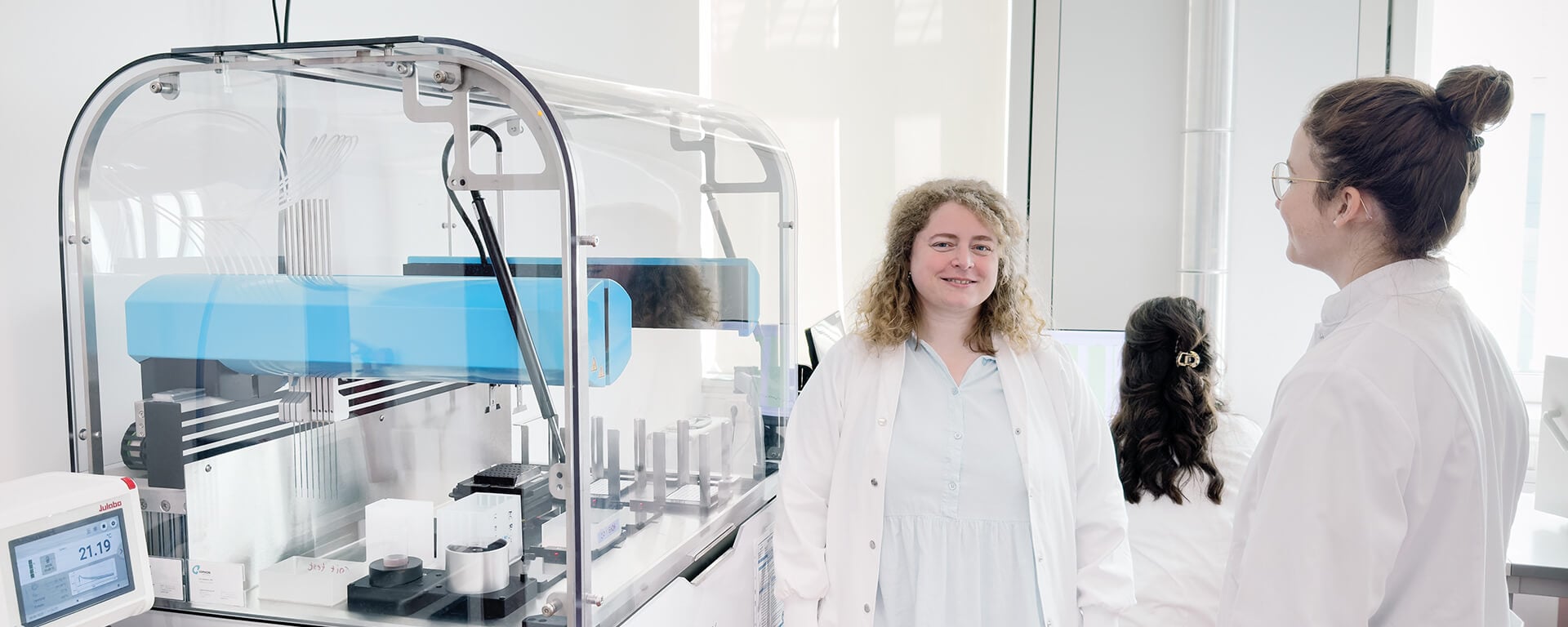
The QPatch serves as the lab’s primary patch clamp platform due to its ability to provide high-quality data while offering higher throughput than manual patch clamp. “The QPatch is automated, and it’s the system we use the most because it offers a balance between the precision of manual patch clamp and increased efficiency,” says Nadia von Schoubye. “My focus is on detailed characterization of compounds from chemistry each week, not screening thousands of compounds.”
A versatile and user-friendly system
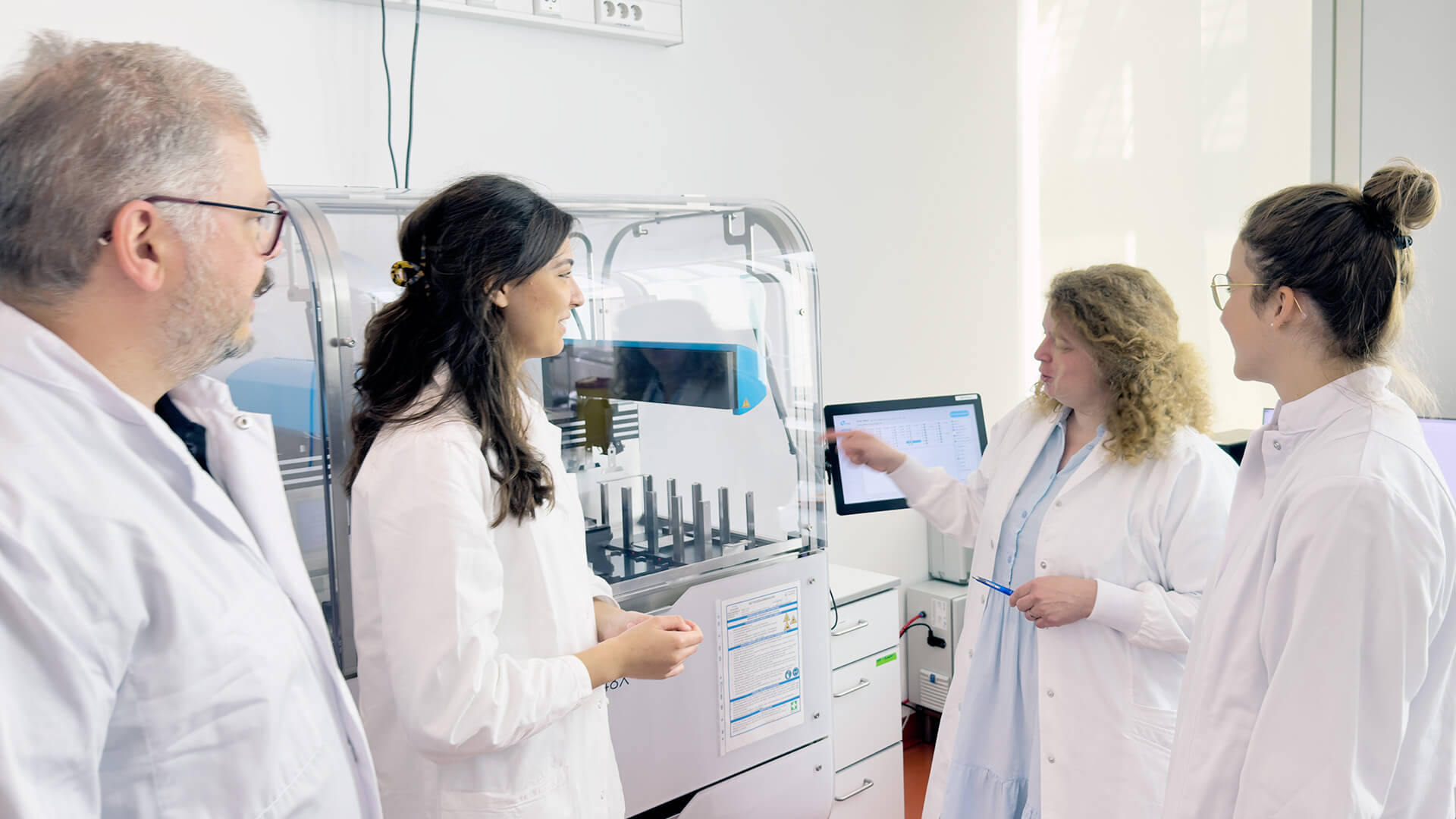
The QPatch is versatile, accommodating a wide range of targets, and offers flexibility in setting up application systems. Ease of use has been another major advantage of working with Sophion systems. “The system’s user-friendly design has been a tremendous help in our lab,” says Nadia von Schoubye. “Everything is modular and customizable, allowing technicians to simply push a button and get started.”
"With QPatch, we can support our projects at another level because we don’t need an army of people doing manual patch clamp. The system is efficient and fast"
Optimized capabilities and data quality
Today, the QPatch is optimizing research workflows in the lab, enabling new research opportunities and accelerating progress in focus therapy areas. The system’s simplicity allows the team to quickly set up experiments, collect high-quality data, and present their findings to key stakeholders.
Onboarding new staff is also seamless. “For those well-versed in manual patch clamp, switching to QPatch took about a week. Even a new team member with no prior manual patch clamp experience picked it up incredibly quickly and is now using it at a very high level,” Nadia von Schoubye adds.
High-quality, reproducible results
A major advantage of QPatch is its ability to match the recording quality of labor-intensive manual patch clamp experiments. “Increasing throughput without sacrificing experiment quality was crucial for us – along with maintaining physiological conditions without seal enhancers,” explains Nadia von Schoubye.
“Automation has significantly reduced our manual workload”, explains Nadia von Schoubye. ”In our most extreme example, tests that previously took a week were reduced to just one hour of work”. QPatch’s consistency minimizes variability and eliminates the subjective elements of manual patch clamp techniques. “Every electrophysiologist knows there’s a bit of superstition involved in manual patch clamp – it’s tricky, sensitive, and time-consuming. With the QPatch, you can test different intracellular solutions and immediately compare success rates under identical conditions, removing much of that guesswork,” says Nadia von Schoubye.
A significant leap in throughput
After just a few days of validation, the QPatch was benchmarked against manual patch clamp and performed exceptionally well. “We’re currently working on a particularly difficult target with an extremely time-consuming assay. Previously, we could test one compound per week – now, we test one per hour,” says Nadia von Schoubye.
"Even in our most extreme example, at its lowest throughput, the QPatch processes one compound concentration response per hour, compared to one week with manual patch clamp. It’s a game-changer"
"Everyone at Sophion is incredibly supportive. If we need tips or tricks, they ask for details and quickly provide good recommendations"
A trusted partner in innovation and collaboration
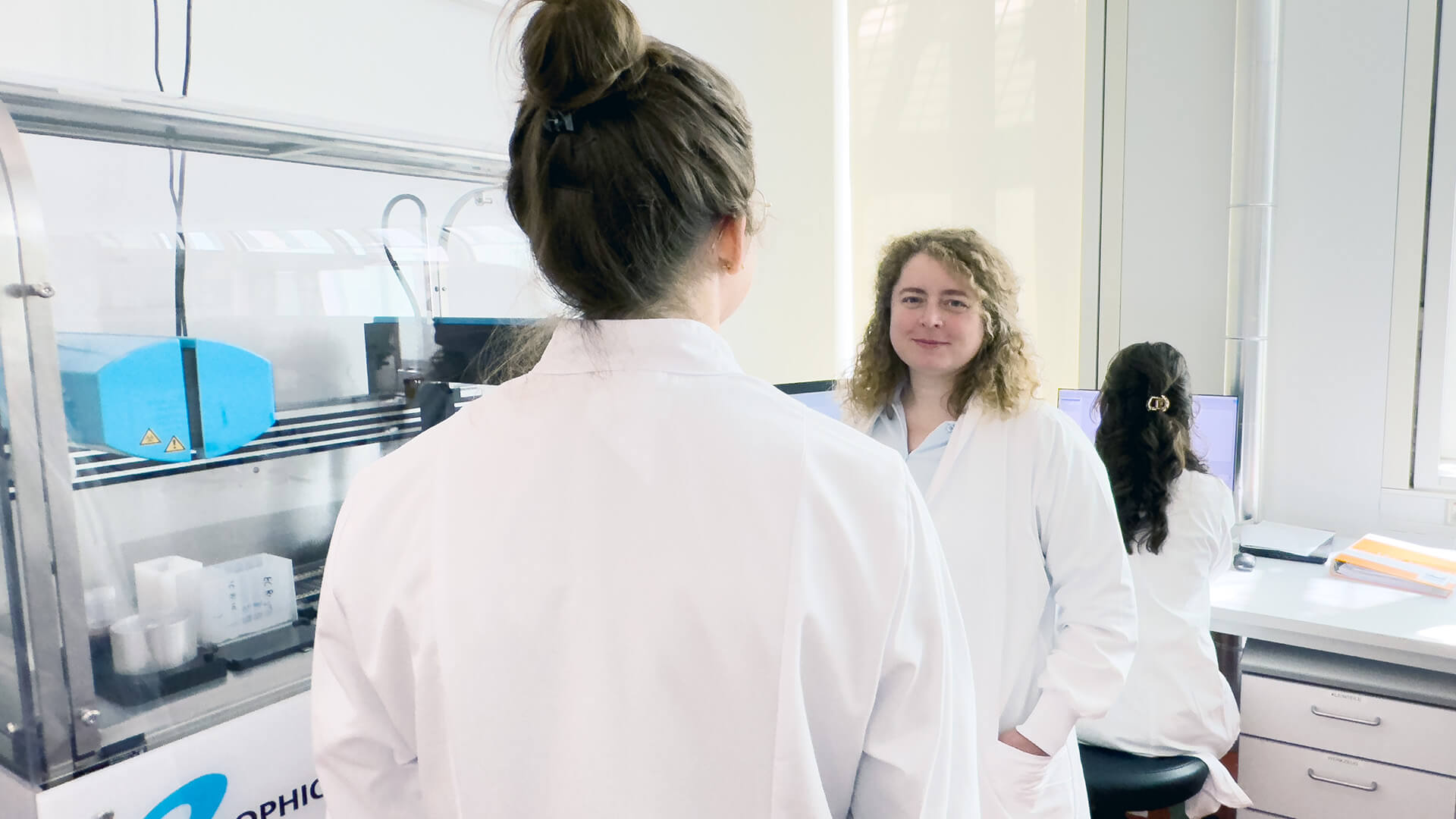
Beyond providing advanced technology, Sophion has been a valuable partner from the start. “The knowledge that Sophion has accumulated over the years is a big resource for us. Also, their user meetings foster another great environment for learning and collaboration,” says Nadia von Schoubye.
Boehringer Ingelheim’s experience highlights the importance of selecting the right instrument for specific research needs rather than defaulting to the highest throughput system. When Nadia von Schoubye took over the lab, manual patch clamp dominated their workflow. She transformed their approach. As she puts it: “The moment you start to use QPatch and you can see how much you can test in a day, it’s honestly a little hard to go back to manual patch clamp.”